Title
A New Name: Union REA Becomes United Power
/sites/default/files/styles/news_card_553x430_/public/news/Feb2019_NL_Truck.png?itok=tXQpeaxT
Friday | January 25, 2019
Card Teaser
This is the second in a three part series chronicling the cooperative’s history leading up to its 80th Annual Meeting this April.

In the late 1980s, United Power overcame a competitive territory war and takeover bid from Public Service Company of Colorado, now Xcel Energy. The rocky battle led the cooperative to reevaluate its service and commit to trimming rates and delivering more reliable power for its members. This is the second in a three part series chronicling the cooperative’s history leading up to its 80th Annual Meeting this April.

Following a member vote in August 1987 to reject Public Service Company of Colorado’s (PSCo) takeover bid of Union Rural Electric Association (Union REA), the Colorado State Legislature urged the two electric utilities to settle its territory dispute in the interest of the public. The dispute had resulted in unnecessary duplication of distribution infrastructure over the years, which was costly to members and customers. 

Three years later in 1990, the two utilities finalized an agreement that would exchange certain territories and establish firm territory boundaries. Union REA would begin serving Brighton, Ft. Lupton, Hudson, Keenesburg and the rural areas of Platte Valley. In return, PSCo would receive territory the new Denver International Airport was to be built on. The transfer closed the corridor separating the two areas the cooperative served along the plains.

With the territory battle behind it, the cooperative began focusing on resolving some glaring problems brought to light during the takeover attempt. Union REA’s Board made a commitment to improve rates and reliability using PSCo’s performance records as a measuring stick. With record performance levels and expectations aimed toward the future, Union REA became United Power, intending to help leave behind the unsophisticated image of the traditional cooperative. 

The name change to United Power symbolized the cooperative’s commitment to its rural heritage while presenting a progressive utility to a new urban member-base. 

By November 1990, United Power had begun serving all the communities acquired in the exchange except for a lone holdout, Brighton, which had voted to deny the service transfer to the cooperative. 

A couple years later, United Power had developed a reputation of reliability and reducing rates. When PSCo approached the Brighton city council again in 1992, United Power members were paying 6 percent less than Brighton residents served by PSCo. 

As the cooperative and PSCo worked to move the transfer forward, United Power made dedicated efforts to educate Brighton residents and answer questions concerning service, reliability and cost of power to bolster its image as a cutting-edge power supplier. United Power assured residents it would track outage and restoration times, guarantee reliability factors as strong or better than PSCo and pledged to freeze rates for two years if the transfer was approved. 

In 1993, United Power finally welcomed Brighton and its residents to the cooperative family.
 

Title
What are Vampire Loads?
/sites/default/files/styles/news_card_553x430_/public/news/Feb2019_NL_Vampire.png?itok=lR6w03eY
Friday | January 25, 2019
Card Teaser
All of these items are responsible for contributing to your “vampire load,” also known as the “phantom load.” Vampire loads come from devices that use electricity even when they appear to be off.

The desktop computer in your office. The living room TV and gaming console in standby or rest mode. Even the cell phone charger you keep plugged in throughout the day. All of these items are responsible for contributing to your “vampire load,” also known as the “phantom load.” Vampire loads come from devices that use electricity even when they appear to be off. These loads are approaching 10 percent of the average household electric use, according to the Environmental Protection Agency. 

Electronics and appliances in standby or rest modes require a little electricity to maintain minimal function of the device so it’s ready to go when you return to using it. The primary culprits are televisions, desktop computers and, particularly, gaming consoles which can use as much electricity as a refrigerator even when not in use thanks to frequent system updates. Chargers are another contributor to the phantom load. A single charger might not be a drain on your bill, but in an increasingly plugged in world, the impact can begin to add up. 

So how can you limit your vampire loads? The obvious solution is to simply unplug devices when not in use and disabling auto-update features that draw power when in rest mode. If you want a limited impact on your daily routine, consider investing in smart power strips. These devices can usually connect to your phone through WiFi or Bluetooth so you can turn them off and on automatically. Many of them even come with surge protection to keep your devices safe during storms or other events that may cause a surge. 

In the digital, connected age, these vampire, or phantom, loads can become a real problem. A little investment and some small changes can end up saving you on your bill. For more energy efficiency information, check out My Energy.

United Power welcomed approximately 2,400 new members on Jan. 17th as the co-op became the sole electric provider to the Town of Frederick.

Title
The Birth of a Cooperative
/sites/default/files/styles/news_card_553x430_/public/news/Jan2019_NL_BirthCooperative.png?itok=m6DZoKJN
Thursday | January 3, 2019
Card Teaser
This is the first in a three part series chronicling the cooperative’s history leading up to its 80th Annual Meeting this April.

Today, United Power enjoys a seat as one of the most progressive cooperatives across the country. Over the past 80 years, United Power has reached milestones few other cooperatives have, but not without first overcoming a few seasons of turbulence. This is the first in a three part series chronicling the cooperative’s history leading up to its 80th Annual Meeting this April. 

In June 1938, shortly after Franklin D. Roosevelt created the Rural Electric Administration, a group of local farmers in the counties northeast of Denver met to discuss the possibility of forming a cooperative to meet their needs. In October of that year, Union Rural Electric Association was born. The cooperative began construction on lines that would first serve members in late January of 1940. 

Though the outbreak of WWII paused development, growth continued through the 1950s. During that time, Union REA entered a competitive territory battle with the state’s largest public utility, Public Service Company of Colorado (now Xcel Energy), which had begun to see the areas lucrative potential. The battle over service territory would continue throughout the 1980s.

Legislation passed in 1961 finally recognized Union REA, and all other utilities in the state, as full-fledged public utilities with the right to serve certified territories, temporarily halting PSCo’s encroachment on the cooperative’s territory. However, Union REA agreed to allow PSCo to serve some of the fastest growing towns in its territory following a negotiation in 1964. 

In the 1970s, PSCo broke faith with the cooperative as growth exploded in the area during that time. The public utility began aggressively claiming territory beyond what Union REA felt was outlined in the agreement. During that time, Union lost nearly 2000 accounts, and many more were considered “at-risk.” In 1987, the Public Utilities Commission declared the agreement invalid in favor of the cooperative, triggering PSCo to initiate a takeover attempt later that year.

Now more than 10,000 members strong, the cooperative’s healthy growth, combined with the proximity to the Denver metro area, made Union an attractive takeover target. PSCo offered to buy out the cooperative for $62.5 million and compensate members with a $500 cash payout to replace lost capital credits. Union REA leadership felt the offer was disingenuous, and communicated directly with membership until a vote on Saturday, August 22, 1987. Union members ultimately voted against the takeover, placing their faith in the promise of the cooperative future. 
 

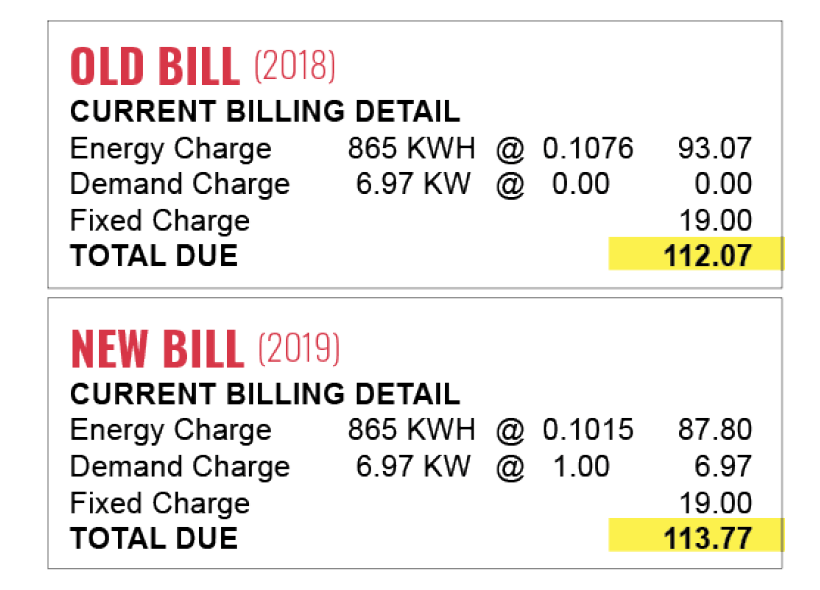
New Rates Effective this Month

Thursday | January 3, 2019
It’s important to understand that while the rate change is effective for energy usage beginning on January 1, 2019, members won’t see the changes reflected on their bills until their February statements.

Title
Bright Lights and Shiny Trucks
/sites/default/files/styles/news_card_553x430_/public/news/Jan2019_NL_BrightLights.png?itok=0AyA7FHH
Thursday | January 3, 2019
Card Teaser
In December, United Power featured its festive, hand-built holiday float, “Christmas Time is Here” in parades in Hudson and Brighton, both communities served by the cooperative.

United Power likes to show its colors during the holiday season. In December, United Power featured its festive, hand-built holiday float, “Christmas Time is Here” in parades in Hudson and Brighton, both communities served by the cooperative. 

Employees worked together to build and decorate a 20-foot trailer with approximately 6,000 lights, more than a dozen holiday-themed props and plenty of spirit to light up the streets. 

The float debuted in Hudson’s holiday parade, hauled by one of United Power’s newly wrapped work trucks, which was wrapped in colorful LED lights. In Brighton, the cooperative debuted its restored 1939 Chevrolet pickup, painted a bright candy red, at the city’s 23rd annual Parade of Lights, celebrating United Power’s 80-year history connecting its members. 

United Power was also proud to roll it’s safety demo truck in Keenesburg’s inaugural holiday parade, Christmas in Keenesburg. 
 

Title
Celebrating Innovation
/sites/default/files/styles/news_card_553x430_/public/news/Jan2019_NL_Celebrating%20Innovation.png?itok=WDRmBqup
Tuesday | December 18, 2018
Card Teaser
United Power held a ribbon-cutting ceremony in December to celebrate its newly energized battery storage facility and the cooperative’s continued commitment to adopting and implementing innovative technology.

United Power held a ribbon-cutting ceremony in December to celebrate its newly energized battery storage facility and the cooperative’s continued commitment to adopting and implementing innovative technology. 

Currently the largest utility-scale battery storage facility in Colorado, the Tesla PowerPack battery system, built in collaboration with ENGIE North America, is expected to save the cooperative roughly $1 million annually in wholesale capacity charges. Energy generated from all sources on United Power’s grid will be stored during low-demand hours to be discharged during high-peak periods throughout the year. 

“As a co-op, we have an obligation to our communities and members to continue scanning the horizon and exploring innovative technologies that help distribute affordable and reliable power,” said Jerry Marizza, United Power’s New Business Director. “When we stop looking ahead, that’s when we start falling behind. We hope to continue setting the bar for other utilities to follow.”

The system has the capacity to store and distribute up to four megawatts of energy, or enough to power up to 700 homes simultaneously. Size and duration of the batteries used was determined during a study of United Power’s monthly load profile in early 2018.

“Energy storage is the next logical step to integrating more renewables into the grid,” said Marizza. “As long as people want to watch television at night, renewables can’t provide 100 percent of energy needs without storage.”

Over the past few years, United Power has added other innovative and renewable projects to benefit its members. From Colorado’s first community solar farm to methane gas collection at the Erie landfills, these projects make economic sense for our members while providing reliable power.

BatteryStorage.png 

Title
Linemen Provide Opportunity to Guatemalan Villages
/sites/default/files/styles/news_card_553x430_/public/news/Dec2018_NL_Guatemala.png?itok=JuLGbFMN
Monday | December 3, 2018
Card Teaser
In October, lights went on for the first time in two villages nestled deep in the jungles of northwest Guatemala.

Kelly_Snow_2.pngIn October, lights went on for the first time in two villages nestled deep in the jungles of northwest Guatemala. After weeks of grueling manual labor in adverse conditions far from home, line crews from Oklahoma and Colorado completed work on a project to provide the villages of Pie del Cerro and Tierra Blanca Salinas the gift of electricity. 

Between long days caused by the lack of major equipment and staving off dehydration brought on by dense jungle humidity, crews often returned to their rooms late in the evening exhausted – ready to do it again the next day. 

“Nothing came easy,” United Power lineman Kelly Snow said. “We had to gut it out each and every day. But even on the worst days, everyone showed up and gave it their all. We came to accomplish something, and we did.”

Line crews were stationed in the small city of Playa Grande, located roughly 300 miles from Guatemala City. Each morning, crews loaded into trucks and traversed dirt-packed and often jarring roads to the villages they’d be powering nearly an hour away.  

Once there, work had to be completed without the use of specialized tools or mechanical equipment, and vehicles were to be used for transportation only. 

Snow, who’s experienced the worst working conditions as a lineman in Colorado’s Front Range, said it’s hard to prepare for the difficulties of working in a third world country.

“It’s like stepping back in time,” he said. “We talked to others who were on projects before us and looked at all the photos, but there are still elements of the unknown. It’s hot and humid the whole time; hard to stay hydrated.”

Despite the harsh working conditions, crews were able to complete the first half of the project in just over a week – providing power to the first of the two villages – and the whole project on time.

“I’m proud to have been a part of this project to provide power to these families and kids,” Snow said. “It gives these kids the chance to continue their studies, and maybe even opens the door for computers or cell phones one day.”

Brief reprieves gave Snow and other linemen an opportunity to spend some time building relationships with villagers, playing games with the children and exploring the nearby jungle and lakes. 

Above and beyond providing electricity, the crews were also able to gift each household with two-year water filters and each school with a laptop and wheelchair.

“The Rural Electric Association was founded on the principal of bringing electricity to rural America,” Snow said just before the project. “It’s an inspiration to be a part of that foundation and spreading it to other countries.”