


Title
NextGen Cooperative Alliance to Add United Power CEO to Board
/sites/default/files/styles/news_card_553x430_/public/news/NextGen.jpg?itok=b8yq_Qfw
Monday | September 13, 2021
Card Teaser
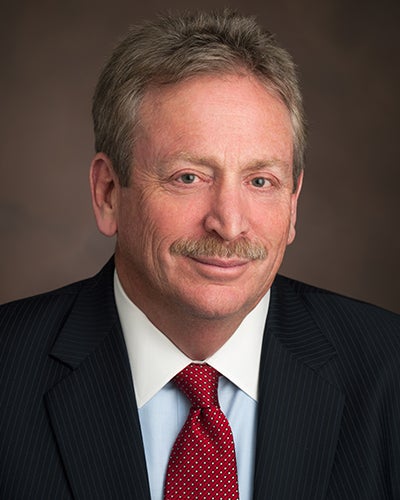
NextGen is a coalition of leaders from distribution cooperatives leading the charge to restore local control over power supply decisions. Gabriel will become one of the organization’s founding board members.

Brighton, CO – The NextGen Cooperative Alliance is set to name United Power President and Chief Executive Officer Mark A. Gabriel to its board of directors later this month. NextGen is a coalition of leaders from distribution cooperatives leading the charge to restore local control over power supply decisions. Gabriel will become one of the organization’s founding board members.

“I am honored to represent United Power on the NextGen board of directors,” said Gabriel. “United Power has been leading the charge advancing policy to shift away from a decades-old model. NextGen was formed precisely for the purpose of advancing the future interests of cooperatives like United Power and its members, which requires re-envisioning and transforming current relationships with power providers.”

The coalition of CEOs that make up NextGen represent cooperatives across the nation leading the way in expanding power supply options, reforming the traditional generation and transmission business model and developing better, more principled relationships with power providers. Their goal is to ensure distribution cooperatives are properly positioned for a secure and cost-effective future.

The NextGen Cooperative Alliance brings together co-op leaders to accomplish goals that restore power to members without being committed to any singular solution. These goals include:

• Restoring local control over power options and decisions regarding their own power supplies. • Positioning power supplies for the future, which includes increasing clean energy, facilitating stable rates and driving local economic development. • Removing barriers that prevent or discourage local innovation. • Restoring and strengthening cooperative principles of democratic governance, ensuring board directors prioritize the members who elected them.

NextGen was formed so cooperative leaders can work together to establish more equitable and flexible agreements with power providers, according to the website. It is dedicated to providing a collective advocacy voice, educational tools and networking opportunities to all distribution cooperatives seeking more autonomy and control over power supply.

“United Power has been working toward a mutually beneficial relationship with Tri-State Generation & Transmission that allows us to be responsive to our members and take advantage of a competitive energy marketplace,” Gabriel said. “What we need is a new G&T structure to address the energy needs of the future and help cooperatives better serve their members. NextGen brings together leaders from distribution co-ops facing similar push back from G&Ts determined to maintain current contracts that no longer make sense in the current energy marketplace.”

United Power is a member-owned, not-for-profit electric cooperative, delivering electricity to homes, farms and businesses throughout Colorado’s northern front range. The cooperative is one of the fastest-growing electric cooperatives in the nation, and in June joined the elite ranks of cooperatives serving more than 100,000 meters. The 900 square mile service territory extends from the mountains of Coal Creek and Golden Gate Canyon, along the I-25 corridor and Carbon Valley region, to the farmlands of Brighton, Hudson and Keenesburg. For more information about the cooperative, visit www.unitedpower.com or follow them on social media Facebook, Twitter, LinkedIn, YouTube and Instagram.

###

Title
United Power Hosts Members at Carbon Valley Open House Celebration
/sites/default/files/styles/news_card_553x430_/public/news/CV_OpenHouse.jpg?itok=OZi1MSiA
Monday | August 30, 2021
Card Teaser
United Power joined a small group of elite cooperatives in June when it surpassed 100,000 meters served off its lines. To celebrate, the co-op hosted an Open House Celebration for members at its Carbon Valley Service Center on August 28.

Open House Celebrated Co-op Surpassing 100,000 Meters in June

Brighton, CO – United Power joined a small group of elite cooperatives in June when it surpassed 100,000 meters served off its lines. It became just the second Colorado co-op, and 31st nationally, to cross the meter milestone. To commemorate the achievement, the co-op hosted an Open House Celebration for members at its Carbon Valley Service Center, located off the I-25 Frontage Road just west of Firestone and Frederick, on August 28.

Several hundred members attended the Open House Celebration, which featured a variety of family-friendly activities, educational opportunities and prize giveaways. It was the first in-person member event the cooperative has hosted since the pandemic began in March 2020. The come-and-go structure of the event enabled members to maintain social distancing by discouraging crowds and allowing attendees to walk through at their own leisure. Breakfast and refreshments were also provided as attendees made their way through the exhibits.

“It is important that we as a cooperative get back to our roots of engaging and interacting with our members,” said Mark A. Gabriel, United Power’s President and Chief Executive Officer. “This was the perfect platform to showcase our newest facility and celebrate our historic meter accomplishment with our members while also accounting for their health and safety.”

United Power packed its garage with interactive exhibits to give members a hands-on experience with everything from electrical safety to electric vehicle ownership. The cooperative’s well-known safety demonstration team kicked things off near the event entrance before a series of large equipment and bucket trucks funneled attendees toward an EV demonstration at the garage’s northeast doors. Northern Colorado Clean Cities provided several EVs available for short test drives with attendees. Outside, attendees were offered a brief informational presentation about the cooperative’s battery storage facility followed by a tour. Originally energized in 2019, the battery storage facility remains the largest in Colorado.

Inside the Carbon Valley Service Center, the community room was transformed into a series of educational booths where attendees could enter to win prizes, learn more about member-exclusive programs and engage with United Power experts on things like energy efficiency. Attendees could also present questions and win prizes from the cooperative’s board of directors.

“We are so excited and thankful to be able to celebrate 100,000 meters with our members in person,” said Ursula Morgan, United Power’s Board Chairman. “After more than a year away, we could not have been happier to see and interact with them again, especially for such a big occasion. Without our members, there is no cooperative. There is no United Power.”

United Power members who attended the event were eligible to win one of ten $100 bill credit prizes, announced following the event’s conclusion. Members also donated canned and packaged food for to the Carbon Valley Help Center, which provides food and clothing to those in need in and around the Carbon Valley area.

Earlier this summer, United Power honored its 100,000 meter family, John and Hailey Takacs and their son Drake, at their new home in Commerce City’s fast-growing Reunion community. Cooperative board members and cooperative leadership, along with Commerce City Mayor Ben Huseman and Tri Pointe homes representative Mariel Schlander, presented the Takacs’ with a prize package containing home essentials, such as a variety of tools and home equipment, including an electric lawn mower.

“We are adding meters at an unprecedented rate,” Gabriel said. “But more importantly, we are adding members. Each new meter represents a new family on our lines or a new business helping shape the economy of the communities we serve. Our members make us stronger, and they make our communities stronger. As your cooperative, it is our privilege to be able to serve each one of our members.”

United Power is a member-owned, not-for-profit electric cooperative, delivering electricity to homes, farms and businesses throughout Colorado’s northern front range. The cooperative is one of the fastest-growing electric cooperatives in the nation, and in June joined the elite ranks of cooperatives serving more than 100,000 meters. The 900 square mile service territory extends from the mountains of Coal Creek and Golden Gate Canyon, along the I-25 corridor and Carbon Valley region, to the farmlands of Brighton, Hudson and Keenesburg. For more information about the cooperative, visit www.unitedpower.com or follow them on social media Facebook, Twitter, LinkedIn, YouTube and Instagram.

###

Title
United Power to Host Fleet Electrification Conference
/sites/default/files/styles/news_card_553x430_/public/news/EV_plugin.jpg?h=45932144&itok=UKkauilg
Monday | August 23, 2021
Card Teaser
United Power is hosting the cooperative’s first-ever Fleet Electrification Conference at its Carbon Valley Service Center, 9586 E I-25 Frontage Road, on September 29.

Conference to Feature Loveland-based Lightning eMotors

Brighton, CO – United Power is hosting the cooperative’s first-ever Fleet Electrification Conference at its Carbon Valley Service Center, 9586 E I-25 Frontage Road, on September 29. Featured guest Lightning eMotors specializes in producing sustainable commercial fleet solutions, including electric vehicles. The free conference is open to public and private fleet operators and managers.

Guest speakers from United Power, the Colorado Department of Transportation (CDOT) and Northern Colorado Clean Cities will present their expertise in the emerging field of electrification at the conference. Topics covered during the conference include the State of Colorado’s new fleet electrification strategy, resources and funding options for fleet services, the growth and availability of charging infrastructure and the future of electrified fleets. During the conference, Lightning eMotors will also feature demonstration fleet electric vehicles.

United Power’s Fleet Electrification Conference convenes from 9 a.m. to 3 p.m. and fleet vehicle demonstrations begin prior to the conference at 8 a.m. Interested attendees are encouraged to pre-register for the conference at www.unitedpowerfleets2021.rsvpify.com. Lunch will be provided.

What: United Power Fleet Electrification Conference
When: Wednesday, September 29, 9 a.m. – 3 p.m.
Where: United Power’s Carbon Valley Service Center, 9586 E I-25 Frontage Road, Longmont, Colo.

Questions or comments regarding the upcoming conference can be directed to Joel Danforth, United Power’s Energy Programs and New Business Director, at 720-685-5644.

United Power is a member-owned, not-for-profit electric cooperative, delivering electricity to homes, farms and businesses throughout Colorado’s northern front range. The cooperative is one of the fastest-growing electric cooperatives in the nation, and in June joined the elite ranks of cooperatives serving more than 100,000 meters. The 900 square mile service territory extends from the mountains of Coal Creek and Golden Gate Canyon, along the I-25 corridor and Carbon Valley region, to the farmlands of Brighton, Hudson and Keenesburg. For more information about the cooperative, visit www.unitedpower.com or follow them on social media Facebook, Twitter, LinkedIn, YouTube and Instagram.

###

Title
Powering Your Community: Amy Clement
/sites/default/files/styles/news_card_553x430_/public/news/JulyAug2021_WDB.jpg?itok=_4Is4h_2
Wednesday | August 11, 2021
Card Teaser
United Power is deeply rooted in the communities it serves and committed to their success. We manage our resources in a way that allows us to give back to our communities and empowers our employees to do the same.

The hallmark of an electric cooperative is not simply providing reliable power to its members. United Power is deeply rooted in the communities it serves and committed to their success. We manage our resources in a way that allows us to give back to our communities and empowers our employees to do the same.

Many United Power employees have volunteered their own time and resources to local nonprofits and educational foundations throughout the service territory. They have been able to leverage both their professional experience with the cooperative and personal interests to become leaders who are critical to powering these organizations.


AmyClementAmy Clement, a Senior Human Resources Generalist at United Power, has been serving on the Adams County Workforce Development Board since 2017. She is the current board chair and serves on the executive committee. The Workforce Development Board’s mission is to create opportunities for success by connecting businesses to a quality workforce in Adams County. The board is composed of community leaders who represent private industry, nonprofits and public agencies.

The individuals on the board represent a variety of industry roles, backgrounds and interests, helping generate quality discussions when determining goals and direction.

Clement said her involvement with the Workforce Development Board represents United Power as an employee of the cooperative, but that it also reflects her desire as a local resident to see community growth.

“My professional background in human resources has afforded me opportunities in workforce development and training that are beneficial to the board” she said. “At the same time, I enjoy personally serving not only the community I live in, but also the people that are looking to better their own lives through employment and career progression.”

When the position on the board opened in 2017, Tom Green, the district representative for United Power in Adams County, said he instantly recommended Clement.

“I believe it’s important for United Power employees to take part in local community organizations, especially when it relates to their role with the cooperative,” Green said. “Amy is a talented professional who I thought could provide fresh input on the workforce in Adams County and be a meaningful contributor on the Workforce Development Board.”

As executive committee chair, Clement is personally involved with policy updates and responsible for communications with state representatives, as well as managing board meetings each month. She recently worked with the board to establish an adult internship program to place Adams County residents in businesses to gain experience and advance their careers.

“This is an exciting opportunity to give back to the community,” she said. “I am hopeful we will be able to place an intern with United Power in the future.”

The board’s responsibilities are accomplished through the activities of the Adams County Workforce and Business Center. For more information, go to www.adcogove.org/WBC.

Title
We All Need the Utility System
/sites/default/files/styles/news_card_553x430_/public/news/JulyAug2021_Demand.jpg?itok=bOjwW9nn
Monday | August 9, 2021
Card Teaser
United Power switched to a demand rate in January 2019 as a way to more fairly charge its members for their electric usage and impact on the cooperative’s system.

Demand Rate Addresses How We Use it Differently

United Power switched to a demand rate in January 2019 as a way to more fairly charge its members for their electric usage and impact on the cooperative’s system. Since its roll out, some members have asked why the switch was made and requested more information about demand and how to understand it.

Electric utilities like United Power often use terms like “distribution system,” “electric infrastructure” and “grid.” These terms refer to the interconnected network of poles, wires, transformers and substations that work to deliver — or distribute — power to members. The system is carefully engineered to meet the needs of more than 100,000 meters and the homes and businesses served off those meters.

Like any other household appliance or electronic device, pieces of our system wear out over time and need to be repaired, replaced or even upgraded to improve reliability. These maintenance costs aren’t based solely on how much power you use, however, but how and when you use it.

When you use more power at once, you’re creating a higher demand on the system. These demand surges have a greater impact on the grid.

For example, a member in a small apartment with a window air conditioning unit doesn’t have the same impact on the grid as a household with two air conditioning units and a hot tub.

Some devices on the system have capacity limitations, for example, meaning they can only maintain a certain amount of power at a given time. The cooperative places these devices strategically to ensure power reliability. When one household served off that device uses a larger share of energy, it causes more wear on it. In some cases, the cooperative may need to replace existing devices with higher capacity ones to accommodate increases in energy usage.

With the traditional blended rate, which bundles demand and energy usage, each United Power member shares an equal cost in the maintenance of the system despite using it in vastly different ways. This means some members have been paying more than they should, while others aren’t paying enough. Whether you use a lot of energy or a little, or even generate your own, a reliable grid is something we all depend on and need available to us.

By separating the demand and energy components on your bill, we are more fairly distributing these costs to members based on how they use power. Each member now pays their fair share of the cooperative distribution system they rely on.

United Power offers a free online resource for members who want to know more about how they use power. Power Portal breaks down your energy usage in 15-minute intervals so you can easily tell what habits are contributing to your demand. Visit Power Portal to learn more about this member resource.

If you have additional questions about the demand rate, you can go to Understanding Demand or reach one of our dedicated energy management specialists at 303-637-1300.

Demand for Electricity is like Demand for Water

You can fill the same 5-gallon bucket with either a garden hose, or a fire hose. A garden hose will not fill as quickly – but the hose costs less to operate, and the impact on the water system is minimal. Fill that same bucket with a fire hose, and it will fill up very quickly, but the surge of water from a fire hose requires larger pipes and a more expensive hose. In the end, both buckets would be full with the same amount of water, but filling a bucket more slowly – smoothing the water use over time – creates less demand on the system and costs less to do. 
 

There has been much written in recent months about the dynamics between United Power and Tri-State Generation & Transmission. It is important to understand United Power’s position in this conversation.

Title
How to Modernize the Electric Grid: Rethinking Our Vision
/sites/default/files/styles/news_card_553x430_/public/news/CEO_Message.jpg?h=45932144&itok=pNegmSzP
Monday | August 2, 2021
Card Teaser
Modernization of the electric grid should not be the singular focus of spending in the United States, rather we should also be targeting our efforts and dollars at specific projects that will make the most immediate impacts.

MarkGabriel_400x500.jpgModernization of the electric grid should not be the singular focus of spending in the United States, rather we should also be targeting our efforts and dollars at specific projects that will make the most immediate impacts. Billions are spent every year on upgrading the system and adding intelligence to the grid and are always balanced against the impacts on rates and customers. Even with unlimited checkbooks on transmission – California and Texas are great examples – system issues can occur.

As a country, we should dream big but equally critical are to make improvements that can have an immediate impact on improving the nation’s infrastructure. The vision of seven hundred and sixty-five megawatt lines crisscrossing the U.S. is a “BHAG” – big, hairy audacious goal – that should be pursued.

However, with even the simplest transmission project taking a decade or more, we should take some specific, short- and medium-term actions.

It is also important to realize while permitting is slow, money is currently available to invest in transmission. The hang up is in assuring the line will be used and commitments made to guarantee the offtake of power. In other words, if no demand backed by financial arrangements, no construction. So, what projects do I believe can and should be done today?

Rebuild the seven AC/DC ties between the Eastern and Western grid. At a cost of roughly thirty million, this project could be complete in less than eighteen months.

Expand the Mead Substation at Hoover Dam into a renewable energy hub. This project will take between twenty-four to thirty-six months to complete. It is at the base of the El Dorado Valley, connects to California, and is the ideal spot for a robust hub.

Complete the Intertie Project started in 1964. In forty-eight months or less, the two hundred and seventy-five miles of transmission could be built that would loop the Pacific Northwest across the west and into the Southwest Power Pool.

Widen our focus and fund technology that benefits the nation and not just a single region. Concentrate those efforts on grid cybersecurity, as well as advanced system sensing to anticipate and avoid issues.

Another key area is to create a cohesive national effort to enhance wildfire tools and technology, including the expansion of right-of-way tree clearing. Encourage or standardize the use of coated cables, especially in areas when undergrounding is limited by terrain or cost.

Create an incentive structure that supports our end goals for improvements in the grid. Pay higher incentives for the power solutions that are really needed: pay a higher rate of return for lines that serve grids wider than a single state, quit paying for redundant infrastructure, and guarantee offtake as a fundamental component of the incentive structure.

Create real markets that span time zones and weather conditions and empower those entities to support. This should also include an RTO to coordinate offshore wind and provide the trading and management platform.

Finally, recognize that transmission is best suited to fix the growing energy divide. The digital divide is often spoken of in our country when the energy divide is an even greater one to navigate for underserved or unserved communities. The “haves” can afford solar panels and storage, while the “have nots” are paying the price. The haves can create microgrids – which serve a purpose – but also serve to create a balkanized electrical system.

Our current business models hang on an engineering measurement – the kilowatt/megawatt hour paradigm. This paradigm is no longer valid when the haves can move their energy supply off the grid for a portion of the day while the have nots pay the carrying costs. We need to move beyond a simple engineering focus on our grid and the delivery of power and understand the far-reaching effects being created with our inherently uneven system.

The question to be asking is how can we effectively grow our grid to realize all the intrinsic potential, and bring all our citizens along to enjoy those benefits? Let us dream for the future and act for today.

This article recently appeared in August 2021 Public Utilities Fortnightly. Read the original article here

United Power crews also need safe access for repairs and maintenance. Barriers, such as landscaping and fencing, should be kept clear of electrical equipment.